Friday, September 16, 2011

Fundamental Constitutionalists


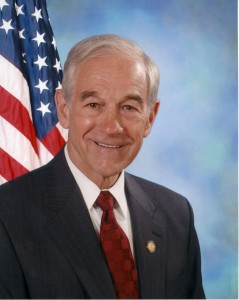
There is a lot of talk these days about whether or not Ron Paul is a racist. Many of his comments would seem to indicate something like that. With respect to racism, only Paul knows in his heart of hearts what is really true. I do find many of his comments disturbing, because he denies the basis of what we know as our American Republic. We all pool our money to provide us with services and infrastructure that no individual could afford on their own. And we do this by electing representatives who will work out ways to use that money for the common good. So we have roads, bridges, schools, trash collection, clean air, public parklands we can all enjoy, rivers that don't contain mostly sewage, less disease and an enviable standard of living.


Paul wants to chuck all of that, based on a reading of the Constitution that completely denies the progress made by civilization in the last 200 years. And 200 years ago, there were no public roads. Instead, everyone was required to come out on road maintenance day with a shovel and work to maintain the dirt and gravel roads of that era. Would Paul suggest that we could all do that with our superhighways? Would he want us to return to the medicine of 200 years ago, when the proposed "cure" for George Washington's fatal pneumonia was to bleed him? While all other countries regulate their skies, would he want to return America to the time before the Wright Brothers, even though flight was invented here?


Paul's reading of our Constitution reminds me of Osama bin Ladin's deranged reading of the Koran; of a Fundamentalist's belief that the Earth sprang to life, just as it is today, in 4004 BCE (because the Bible says so). Having actually read the writings of James Madison, I would disagree with Paul's literalist interpretation of the Constitution, as Madison also would. While Madison penned most of the document and most of our Bill of Rights, as President, Madison demonstrated a clear understanding that our Constitution was a flexible outline from which progress should be made for the advancement of civilization.


The Press loves to follow Ron Paul because he says such funny things, just as they loved following Jesse Jackson. Both say the darndest things and both are fun to quote. Neither are actually seriously electable, as their ideals are a danger to our American system.

Tuesday, August 30, 2011

States' Rights


I have been thinking about this Texas Governor Perry and how he's suddenly a convert to "States Rights," despite his rather poor record on "States Rights." Back when Civil Rights was an issue and the Democratic Party essentially ejected the Dixiecrats, who wanted segregation and that was about "States Rights," which was an issue pretty much settled in the Civil War, it was a Democratic stance. In fact, the Democratic party originated the whole "States Rights" movement around the time of Lincoln.

But how did we do when the states were supreme? Not too well. In fact, on September 17, 1787 we had a top secret meeting of non-elected representatives of the various states who met in a gathering they later called a Constitutional Convention (to cover the non-elected part of their "representation") and hammered out a whole new form of government "in Order to form a more perfect Union."

Here were the facts under "The Articles of Confederation and Perpetual Union" which was our first Constitution:
  • Congress requisitioned money from the states.
  • No state paid all of their requisition.
  • Georgia paid nothing.
  • A few states paid the U.S. an amount equal to interest on the national debt owed to their citizens, but no more.
  • Nothing was paid toward the interest on debt owed to foreign governments.
  • By 1786 the United States was about to default on its contractual obligations when the principal came due.
  • Most of the U.S. troops in the 625-man U.S. Army were deployed facing British forts on American soil.
  • The troops had not been paid; some were deserting and the remainder threatened mutiny.
  • Spain closed New Orleans to American commerce; the U.S. protested, to no effect.
  • The Barbary Pirates began seizing American commercial ships. The U.S. had no funds to pay the pirates' extortion demands.
  • States such as New York and South Carolina violated the peace treaty with Britain by prosecuting Loyalists for wartime activity.
  • The U.S. had no more credit if another military crisis had required action; during Shays' Rebellion, Congress had no money and General Benjamin Lincoln had to raise funds from Boston merchants to pay for a militia to put it down.
  • Congress was paralyzed. It could do nothing significant without nine states, and some legislative business required all thirteen.
  • By April 1786 there had been only three days out of five months with nine states present. When nine states did show up, and there was only one member of a state on the floor, then that state’s vote did not count. If a delegation were evenly divided, the division was duly noted in the Journal, but there was no vote from that state towards a nine-count.
  • States, in violation of the Articles, laid embargoes, negotiated unilaterally abroad, provided for armies and made war.
Not a pretty picture. So the "States' Rights" folks want us to go back to this? They keep quoting the 10th Amendment, which says:

"The powers not delegated to the United States by the Constitution, nor prohibited by it to the States, are reserved to the States respectively, or to the people."

So what does this mean? I looked, and found information that must have come as quite a surprise to a Republican President, as this was decided in August, 2008:

In the case of County of Santa Cruz v. Mukasey, originated in 2003 when Bingham McCutchen LLP and the Drug Policy Alliance, along with private attorneys Gerald F. Uelmen and Benjamin Rice, sued the federal government for raiding a Santa Cruz-area medical marijuana cooperative, the Wo/Men’s Alliance for Medical Marijuana, Judge Jeremy Fogel of the U.S. District Court for the Northern District of California, San Jose Division, relied on U.S. Court of Appeals for the Ninth Circuit Chief Judge Alex Kozinski’s opinion in Conant v. Walters and ruled that by "Utilizing selective arrests and prosecutions, the federal government has sought to sabotage California’s reasoned approach to medical marijuana use."

A calculated pattern of federal enforcement can render state medical marijuana laws effectively inoperable, which violates the Tenth Amendment of the U.S. Constitution.

Essentially, the Federal government has laws that say that marijuana is a Schedule I drug, as defined in the 1970 Controlled Substances Act, which means there is no applicable medical use for it. But certain states have passed laws allowing for its use by cancer patients, as it stops them from wasting away, due to the fact that cancer treatment drugs cause nausea and tend to cause patients to not eat.

In this, the 10th Amendment is allowing states to overrule federal law, but the federal government can still prosecute under the law. The state has to prove that there is a systematic pattern of enforcement that is designed to make the state law inoperable.

That's a bit of a stretch from "States' Rights," and I note that most of the "States' Rights" crowd didn't really like that ruling. After all, it's the "pinko Liberals" who want pot legalization.

We fought the Civil War to disallow the States from nullification and to disallow them from dissolving the Union. The United States didn't take the "States' Rights" crowd very seriously. In fact, during the Civil Rights era, the "States' Rights" crowd didn't fare too well, either.

So, now, I hear the Party of Lincoln crying "States' Rights." Yeah. As if.

Monday, August 1, 2011

Entitlement "reform?"


This is an open letter to Senator Kay Bailey Hutchinson.

I was watching you just now on MSNBC and I am confused.

You referred to a need for "entitlement reform." And, for some reason, I was having trouble understanding why one needs to "reform" something that someone has earned. Because that is what the word "entitlement" means. And, at the age of 56, I feel that I have sufficiently earned certain entitlements from my government that will protect me when I get older.

Currently, my 80-year-old father is receiving Social Security. I am certain he benefits from Medicare. By "reform," do you mean to take away my father's benefits that he had worked hard all of his life to receive? Currently, my older sister is receiving the Social Security disability entitlement. By "entitlement reform," do you mean to take away her income just because she has a disease that will eventually kill her? Do you think she ought not receive the benefit because she is, somehow, not worthy of receiving the entitlement she worked for?

Everyone in the workforce today is paying in to the Social Security system, unless they are a member of the clergy who has opted out of the system.

Not too long ago, I ran into a National Guardsman. He had been deployed to Iraq two times and Afghanistan once, so far. He told me that we needed to do something about "these entitlements." Knowing that he, too, pays into the Social Security and Medicare system, I asked him where his uniform came from. He stood a little straighter.

He told me that the Guard issued him his uniform, as they issue the uniforms of everyone else in his unit. I told him that he has to do something for that uniform and asked what he did. It was then that he recounted his tours in Iraq and Afghanistan, the training he went to on weekends and so on, as well as all of the military training he had, thus far.

I told him that he was entitled to wear that uniform because of his service and his sacrifice. The uniform is an entitlement. He has earned it. He told me that he now thought that maybe we ought not mess with entitlements.

Are you suggesting that our soldiers should supply their own uniforms?

Entitlement has become the new Republican "dirty word." But an entitlement, Senator, is earned. And it sounds to me like you are interested in taking what Americans have worked hard for and have paid for away from them. And I just don't think you would really want to do that.

Can you please explain to me what "entitlement" means to you?

Friday, July 29, 2011

The Third Party


The United States system, from the very beginnings of our partisan Republic under President Washington, has tended to be run by two parties. The first two were the Democratic Republicans, who tended to follow Jefferson and the Federalists, who tended to follow Alexander Hamilton and helped our second President, John Adams (but not enough to get him re-elected for a second term).

Some years I read a lot about this in a very good book entitled American Aurora: A Democratic-Republican Returns. The book's author, Richard N. Rosenfeld edits together excerpts from the Philadelphia Aurora, a newspaper that was published by Benjamin Franklin's grandson, Benjamin Bache, and later by William Duane, this newspaper was certainly not on the side of President Washington and absolutely dead set against John Adams and Alexander Hamilton. You also read articles from the opposing newspapers of that era, offering rebuttals and supporting their side. The book is listed by Amazon as "out of print, which is a real shame. People should be reading it now to better understand the rise of "faux news" as the Murdoch empire promulgates it. Another parallel was the pressure on the Press of that era to make enough money to survive. The Philadelphia Aurora received printing jobs from the Democratic-Republicans, while opposing newspapers, such as the Gazette of the United States received printing jobs from the Federalists. Were it not for the extra money earned from printing everything from official documents for the United States to commissioned pamphlets, these newspapers would have failed.

Today, we have a government that has tended to create a two-party system. When Jefferson won his first election, most of the states had decided on a winner-take-all system for electors (because they opposed Adams) and this continues to this day, denying third parties the Presidency with regularity. And, in Congress, since the end of Reconstruction, there have been a total of 31 U.S. Senators, 111 Representatives, and 22 Governors that weren't affiliated with a major party. That's not a lot since the 1870s.

But today, we have a third party that is involved in affairs in the House of Representatives and is also a threat to Republican members of Congress. It's the Tea Party. The Tea Party has its own sources of funding. And they have their own grass roots movements. But they're acting, not like a loyal segment of the Republican Party, they're acting mostly on their own. And they're refusing to cooperate with Speaker Boehner's agenda, for the most part.

Here is how the Republicans can stop this:

They can declare the Tea Party not loyal and not Republican, refusing to allow their candidates to run against Republicans in primaries. After all, registered Democrats cannot run against Republicans in primaries, so why should Tea Party candidates? This keeps Republican seats safe from primary challenges and takes the fear away from them.

And Speaker Boehner can declare his Republicans capable of dealing with either of the two smaller parties in the House of Representatives. So if the Tea Party freshmen won't back him, he'll just cross the aisle and compromise with the Democrats. Either way, he leads. Either way, he wins. And since the Tea Party cannot run against him or any Republican candidate in a primary, they're able to campaign as the center movement in America. Not lefties like Democrats, not hard-line Nazis like the Tea Party.

For too long, the Press has not seen the Tea Party for what it is. It is its own entity. It is not Republican and it is not Democrat. And one thing I have noted is that the Tea Party platform favors something that only one other political party in the United States has ever favored: The complete dismemberment of American government. The party that favors dismantling our government, along with the Tea Party is the Communist Party—though after the fall of the Soviet Union, I have to wonder if they still have any members left.

So I would invite Speaker Boehner to see the Tea Party as their own thing and not caucus with them. He can do more and win more by compromising with the larger, Democratic, Party and push this radical group into the corner, where they belong.

Wednesday, July 27, 2011

Hate. Crime.

I am troubled by what happened in Norway and have been corresponding with a friend of mine named Howard. He's a great guy. Probably one of the best and most knowledgeable computer and video nerds this planet has produced. And he worked for a religious organization, keeping really antiquated computers running with new software—despite all odds.

He is bothered by what is being said about Anders Behring Breivik, the norwegian killer who has caused so much grief in Norway this past week. Apparently, Breivik is a "Christian," though I don't know what kind of Christianity condones what he did. Problem is, I can see that my friend, Howard, is really troubled by this, as his faith is being challenged.

Here's what I wrote my friend, Howard, about this hate crime:

Howard, you see the world through a lens of Christianity and I understand that. You are a devout man and your devotion obviously has its rewards.

You will get prickly replies because, frankly, everyone in Norway is pissed off at what is happening in the United States and what happened here after September 11, 2001, when Bush decided he, then, had a right to go after an adversary that was not involved. And some of the same people who were "with" Bush and not "against" Bush (as was Norway) are, right now, threatening the entire world with a deeper recession or another recession by saying that the United States does not need to raise its debt limit and does not need to worry about those consequences.

About the only thing Americans can and should offer Norway is our heartfelt condolences with no explanation.

This is a Norwegian September 11 and everyone in Norway believed that their country would be spared any of this because of the kind of society they are and because of their tolerance for all people.

Howard then sent me something that Craig L. Parshall, Sr. VP & General Counsel for the National Religious Broadcasters here in the US wrote, trying to distance his Christians from this "Christian."

Here is what I wrote back:

As regards the "Christian Fundamentalist" message you sent. I don't forget that Dr. George Richard Tiller's murderer, Scott Roeder considers himself a "Christian," even though he murdered him in his church, after the Doctor had just finished his duties as an usher there. I do note that it used to be considered an absolute mortal sin to cause someone's death, to lie, to steal or to disobey any of the ten Commandments on holy ground, such as in a church. In fact, The idea comes from the original Judeo-Christian concept of Sanctuary, where persons fleeing the law could go to places of worship and be protected.

In the Old Testament, God commanded Moses to set aside cities and places of refuge in Canaan where the persecuted could seek asylum. This concept can also be found in ancient Roman law, medieval canon law and British common law.

For a good source of the legal justification of this (in the 1980s), please see: http://www.newsanctuarymovement.org/build-tradition.htm

So one could honestly argue that Roeder isn't a Christian, really. But he did participate in "Operation Rescue" which is a Fundamentalist Christian-run organization, mostly out of California, who literally moved to Wichita to run 24-hour protests. He was associated with the Montana "Freemen" movement, which is what you would have to call extremist right-wing.

Here is where the similarity begins between Scott Roeder and Anders Behring Breivik: Heated rhetoric. "Operation Rescue" and other anti-abortion groups would frequently post "hit lists" on the Internet, as well as create signs and wanted posters for specific individuals who were involved in clinics they didn't like. There is substantial evidence that Roeder participated with these groups, listened to their rhetoric and did his best to amplify it. He also acted on it.

Breivik participated with a group called QFF.
In 2002, he stated in his journal that he was "ordinated as the 8th Justiciar Knight" with them. Part of the reason why nobody suspected that he was a problem is because he formed and ran his conspiracies on the Internet. By July, 2010, he stated that he had "successfully finished the 'armour acquisition phase' and [had] created an armour cache" that he buried in the forest.

Breivik was a frequenter of various websites all dealing with right-wing hate groups who are xenophobic racists. He contributed to these sites. and his mass murder was as frightening as Timothy McVeigh's attack on the Federal office building in Oklahoma City. These xenophobic groups all consider themselves as Christians and use Christian labels for their status in their society.

Problem is, here in the United States, we have less supposedly radical groups taking over our Republican party. I call your attention to Sharron Angle, with her "Second Amendment solutions" to losses in the ballot box, to Sarah Palin's "Don't retreat, reload!" exhortations and the connection that Arizona's SB-1070 has to The Immigration Law Reform Institute (ILRI), a racist hate group. They, in turn, are affiliated with a group called the Federation for American Immigration Immigration Reform (FAIR). FAIR's founder, John Taunton is an avowed racist and key members are members of white supremacist groups, spreading racist conspiracy theories. The less-extreme help the extremists by giving them cover through rhetoric. And they get the more extreme all set to justify their manifesto of intolerance and violence.

So don't look to Norway and Europe as the only place this arises. It has happened here and will probably happen again here if we fan the flames of this intolerant rhetoric.

Howard, I think it would be absolutely illegal for me to specifically campaign against and single out one religious group for it's specific destruction. Especially were I to get together with co-conspirators and publish photos of the principal people in the organization as "Wanted," paint bulls eyes on them, put them on a list of people who would be better dead, follow them home, publish their addresses and phone numbers, take photos of the outsides of their homes, along with any children they had, threaten all employees who worked for them—even part-time—and call them nightly to let them know they are being watched (all of this is what the groups who were in Wichita were doing leading up to Dr. Tiller's death).

The beginning of this kind of behavior is a decision—that a group, a person, an ethnic variation, someone who does not believe as you do—is something external, outside and to be not appreciated for the basic humanity that inhabits them.

Listen to those who speak to you and listen for speech that excludes others as "apostates," "non-believers," "infidels," "unholy," "un-righteous." Don't trust that speech because, as a matter of fact, we're all on this planet, this fragile blue orb, this spaceship Earth—together. And nobody has any right to take away anyone else's rights. And nobody gets to say that all people cannot be happy just as they are at the level of consciousness they have, thus far, attained.


Monday, July 18, 2011

On Taxes


Grover Norquist was recently on MSNBC's Hardball with Chris Matthews and affirmed that he is holding the line on no new tax hikes to increase revenues. No matter what, he doesn't want the United States Federal government to increase taxes, despite the fact that they are at an all-time low (since the 1930s).

Norquist's "Pledge" is useful, from the standpoint of clarifying how taking a stand does not work in government.

I was talking with a friend of mine recently who told me that he wants our government to be run more like a corporation or a company. And I really like my friend but I told him that he was absolutely never going to get any government by wanting one run like a company. Because here's what happens in a company:

The CEO makes a decision. the Board votes to implement it, all managers toe the line and everyone in the company starts to produce what the CEO told them to produce. If the company is lucky and the CEO is making good decisions, the company prospers and the shareholders all get paid.

But our country works on the basis of varying opinions. You may wish we had larger highways, while my priorities are for more trees and lakes. I may want your highways to go around my trees and lakes, while you may see that the best way to get from Point A to Point B is a straight line. If we're run like a company, the CEO decides and we don't get a say in the matter. If we're run like a government, we may be able to compromise. I get some of my lakes and trees, you get a straighter road than you might have gotten if I had my way.

Norquist is having none of that.

He wants his straight highway and, "to heck with the consequences." Problem is, he's somehow influencing a lot of politicians who are, unfortunately, very happy to paint themselves into a corner. And here is why I have a problem with Mr. Norquist: He was never elected by the people. He is basically saying that he is going to run the United States government by holding politicians to a "pledge," as if it were more important than the Constitution of the United States, national defense, or the Fair Faith and Credit of our country.

Again, I remind you, dear reader, Mr. Norquist does not hold any elective office. He has never held any elective office.

Here's what taxes really are, despite what Mr. Norquist would have you believe.

We all pool our money to provide something for ourselves that we, individually cannot afford. I cannot build a road. Don't have the money. I also cannot afford to hire a full-time teacher for my daughter and build a road. I can't maintain the roads I drive on. I don't have a large enough yard for a leach field and I don't think I could hand-dig a well and put in a cistern like my grandparents did on their plot of land. And I certainly cannot afford to build a municipal water supply and sewer system. Or a water treatment plant.

But if we all kick in to a common pot, we can get all of that done and more. So, we all agreed to do that and now, we have taxes. But we have services, too. We can send our children to public schools and, when we meet the teachers, we discover that they are qualified. We don't even think of what happens when we flush the toilet and, when we turn on the tap, we expect water that is clean and won't cause cholera.

We get in our car and drive on roads and occasionally run across a pothole. But mostly, the road is smooth. And there are sidewalks. And our trash is picked up. And in the winter, our streets are plowed. All, courtesy of our taxes.

Now there are some areas of this country where you have to take your own trash to the dump. Other areas where snow plows do not go. Still others where potholes have such longevity that you think, "When it's 21, I'll buy it a drink." But we all receive a lot of services we pretty much take for granted from our government. And I'd say our taxes are pretty low and our government is pretty honest.

So here's my message to Mr. Norquist: I didn't elect you to be so much as my dog-catcher. But you ought to be. Because even a dog catcher understands that taxes mean the people who provide public services all get paid a living wage. And the people paying those taxes get service that they're paying for. And the end result is a good town, city, county, state and country.

Monday, May 9, 2011

A New Small Business

OK, so now I have started Hollis Internet Marketing and I am building websites and marketing small businesses in my area. It is going fairly well, but it's not really a living yet.

I have a lot of hope that eventually it will develop into an honest-to-goodness business. And one of the problems, according to my accountant, of working "for the man" is that, while you do have a job and you do get paid, there is nothing you have invested in. With Hollis Internet Marketing, I will actually build an investment.

One of the things that i hear a lot about is that Republicans favor small businesses in their strategies. Well, I sure don't see anything coming my way from them. They tell me that my taxes will go down if I vote for them, but my taxes didn't go down appreciably under Bush and they indebted our nation horribly. Fact is, in order to get the services we all want, we need to pool our money, somehow. If it takes $1 Million to build a mile of interstate highway, we need to pool our money because I know for sure that I can't afford more than a few yards, let alone a mile.

They're losing the "less government" argument with me, as the development of the Department of Homeland Security was the largest increase in government bureaucracy since the 1960s.

I think there is this Mythological America that we all like to hearken back to. An America with a very small government, one where most people paid no taxes. Where government was pretty much nonexistent. It's not true, you know. There has always been government in the cities in America. And sometimes that government pretty much ignored its citizens to enrich those who had their hands on the reins of power (think Tammany Hall). but American was largely agrarian back then. Of course if someone sold you bad beef, you got sick. If your community wanted a school, you all had to pool either your money or your work and build a schoolhouse, then pool your money to pay a teacher -- usually supplying her with a home to live in as well as an income.

So there were taxes back then. We just didn't hate them that much.

And where "government" didn't exist, it was pretty scary. After all, when was the last time you and your wife went for a stroll and ran into a known prostitute? When was the last time you were asked to join up with a number of other men to run off or kill a thief? I don't see that posses are all that necessary today and I also don't see them accidentally shooting the wrong person. Instead, I generally see very good police work and very intelligent prosecutors who take the law seriously and not into their own hands.

Oh, and one doesn't go to one's barber for surgery, either.

I think that Mythological America wasn't all it was cracked up to be. We certainly didn't have interstate highways, storm sewers, paved streets with curbs that kept your yard from flooding from the runoff from your neighbor's yard across the street and public servants who are professional and not venial and prone to corruption.